A Scribble Works guide
AI tutor without a screen
How can AI help my kid learn without more screen time?
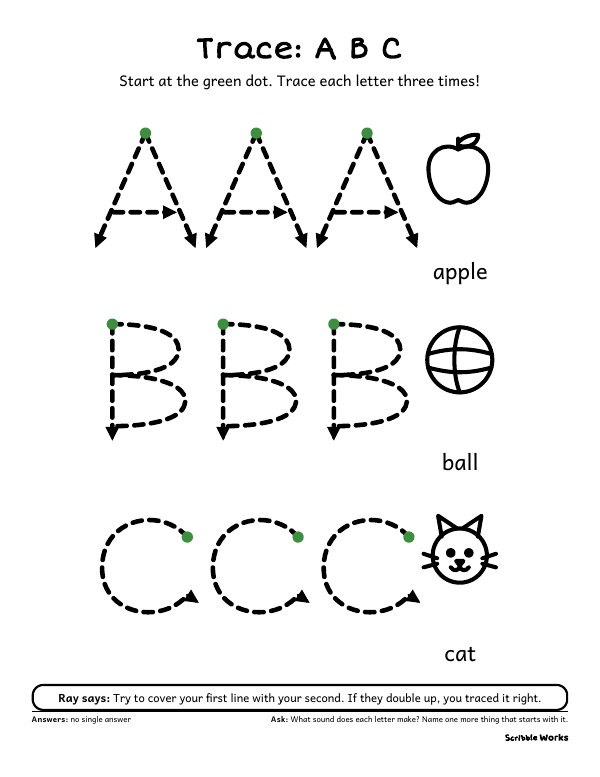
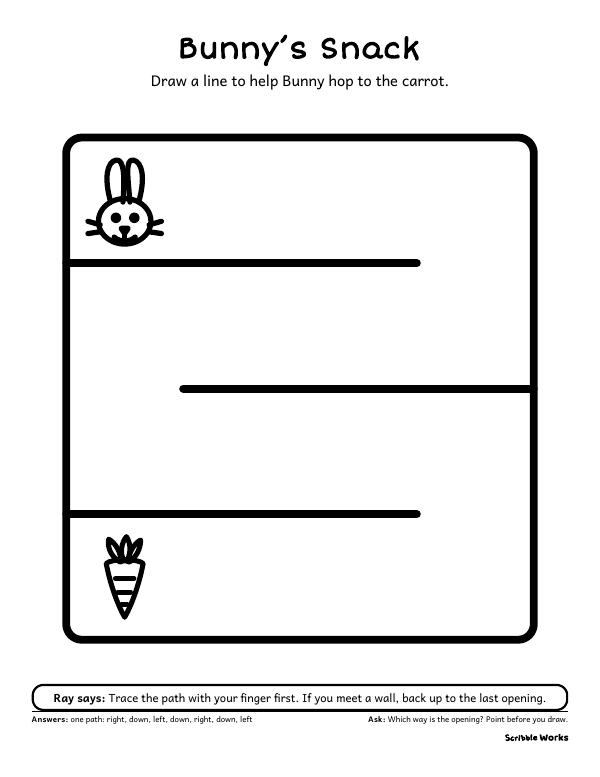
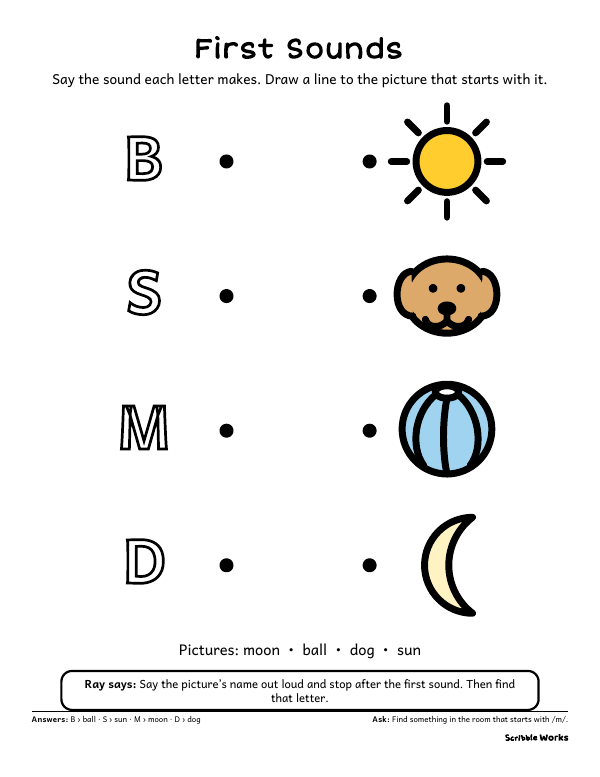
The honest answer is that it can, but not in the way most of the “AI for kids” pitches assume. The pitches put a screen in front of the child and the model behind the screen. Turn that around. Put the model behind a printer, and put a sheet of paper in front of the child.
The printout is the interface. That sentence is the whole idea, so it is worth being precise about what it means.
What the AI actually does
Everything a good tutor does before the lesson starts happens without the child present. Someone has to decide that a four-year-old who is just starting to trace should get wide lines and short strokes, that a six-year-old who already counts to twenty is ready for “one more than,” and that the maze should have exactly one way through so the pencil never learns to give up. Someone has to pick the animal, size the letters, and check that the page can be finished before breakfast is over.
That is the work the model does. It is planning, sizing, sequencing, and checking. It is not talking to your child, and your child never sees it.
What the child actually does
The child gets a page. One page, one thing to do, a crayon. There is no next-button, no reward animation, no autoplay into something else. When the page is done, it is done. The child has a physical thing to hold up, which turns out to matter more than we tend to remember.
The day stays on paper. Breakfast, the page, the crayon, the fridge. The screen is never in the loop for the kid, even though a model did a fair amount of thinking about that page.
Why the split holds up
The usual worry about AI and small children is not really about the model. It is about the screen: the attention it takes, the way it keeps asking for more, the way it makes a parent the person who says “that’s enough.” A page cannot ask for more. It ends.
So the question “how can AI help my kid learn without more screen time?” has a plain answer. Let the model do the grown-up work, upstream, out of sight. Let the child do the child’s work with their hands. Keep the screen on your side of the kitchen, not theirs.
What this looks like on a Tuesday
A page gets printed while the coffee is brewing. It is right for the kid it was made for, this week, not last month. The kid does it at the table. Somebody sticks it on the fridge. Nobody negotiated about a tablet.
That is the shape of the thing. The rest of this guide is about how to get there, what to look for in a page, and what to skip.